Family loyalty is a powerful force that shapes our lives profoundly, both positively and negatively, without our even being aware of it. It can give us a sense of belonging and safety, but it can also stop us from fulfilling our potential and living a life that flourishes. Through this article you will come to understand what unconscious family loyalty is, what emotional contracts are, the weight of family inheritance, unconscious repetitions — and you will find keys to free yourself from them.
Family inheritance
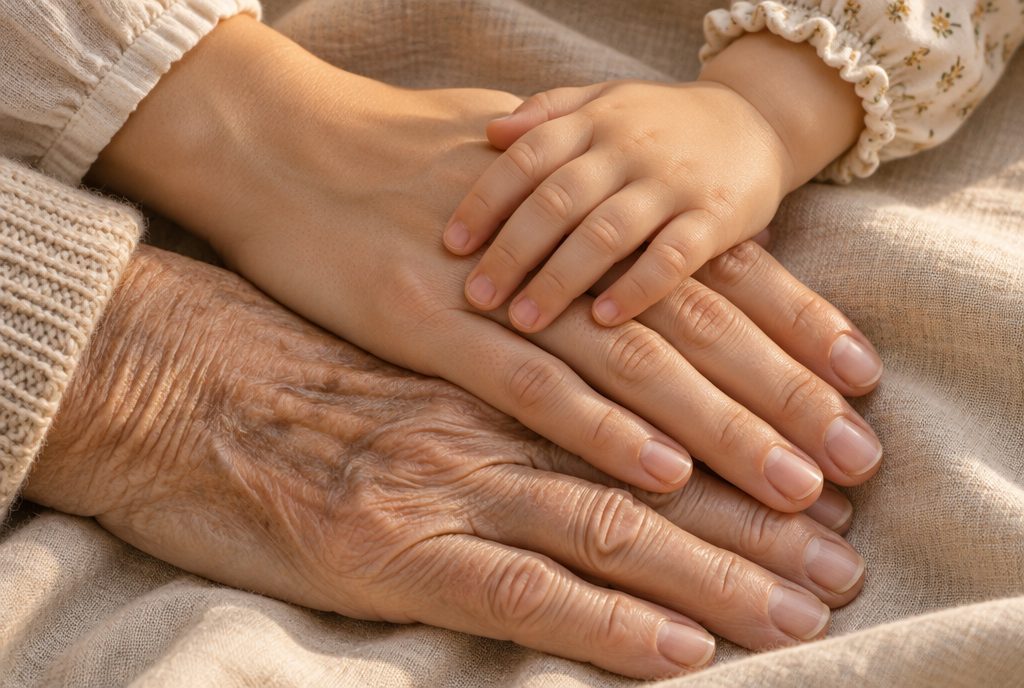
From our genealogy we inherit far more than physical resemblances and personality traits. What our parents and our ancestors lived through — their experiences, the good ones as well as the painful ones — is passed on to every individual in the family tree, through DNA and through the family unconscious.
Read more about family transmissions here
Out of those life experiences, our ancestors built beliefs (both constructive and limiting), behaviours, and patterns of reality, of thinking, of acting, of relating to themselves and to others — all of which can influence us today, for better or worse, by transmission.
In short, each person inherits and carries within them the whole history of their family tree, without even knowing it, and may sometimes repeat it.

Emotional contracts: the unspoken agreements that limit us
These are the key element of unconscious family loyalty. It is important to understand that every individual in a genealogy is connected — not only by blood, but through their collective unconscious.
The arrival of a new member in a family, in a family tree, is never a neutral event. Even before birth, the child arriving already carries family expectations, conscious and unconscious, like an "order" placed with that child by the parents and by the whole tree.
For example: a mother who has lived through sorrowful events wishes for her unborn child to be "her light" (this is conscious). Or, in conflict with her own parents, she hopes this child might bring her a certain legitimacy in her own role as a parent (this is often unconscious). This is an unconscious order, which acts as a kind of programming for the child, who will then choose whether or not to comply with that request (and whether or not to develop the personality that answers it).
Parental and family programming operates, among other things, through the choice of the child's first name, which influences their personality and their "mission" both within the family and outside it.
Read more about first names in psychogenealogy
In psychogenealogy, it is possible to identify what the unconscious family programming and expectations were at the time of your birth, whether or not you chose to answer them, how you answered them and may still be answering them now — and then to act accordingly (keeping the order entirely, or rejecting it partly or completely). This makes it possible to understand how a personality was built, the behaviours it produced, the family bonds involved, and so on.
Every individual is therefore connected to the unconscious expectations of their parents and family members. Broadly speaking, they are subject to an overall family loyalty — meaning they can be loyal to their entire family tree. But they will be bound more strongly, energetically and therefore emotionally, to certain individuals; they are tied to them by a contract of unconscious loyalty. This unspoken agreement affects how they behave, what they are supposed to think, and how they are supposed to feel.
Unconscious family repetition
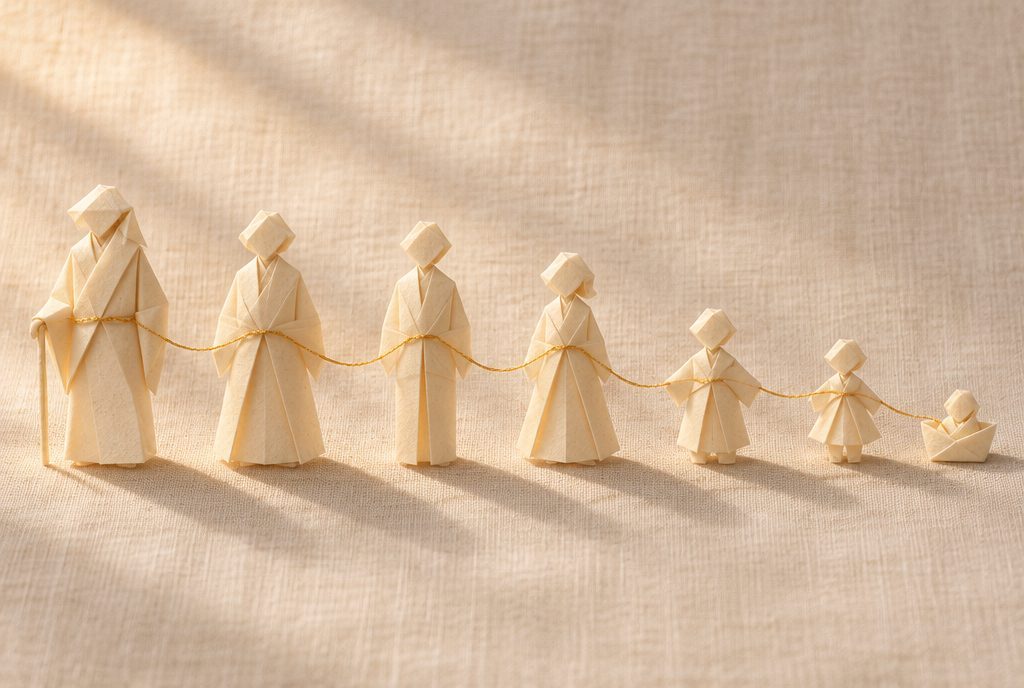
Being particularly bound to certain ancestors through these contracts of unconscious loyalty, an individual may come to develop the same character traits, the same personality, make the same life choices, live in the same places as the ancestors in question, train for the same work… It can extend as far as living through similar painful experiences, or developing the same illnesses. This is what we call a repetition through unconscious loyalty to one or more family members.
These repetitions can in fact be both conscious and unconscious. It all depends on the degree of "closeness" between the individual and their ancestor. They may consciously choose to reproduce their father's professional path, for instance, for reasons bound up with their relationship and various stakes. On the other hand, they might have developed the same passion for sewing as their maternal great-grandmother (to take a light example) — someone they never met and about whom, consciously, "they know nothing".
In psychogenealogy work, the links between individuals in a family tree — and therefore the unconscious loyalties that may be sources of repetition — often reveal themselves through first names and through the various dates of a life (birth, marriage, death…), in addition to bonds of affection and to events.
Hence the value of using numerology applied to psychogenealogy.
Read more about first names in psychogenealogy

How can you free yourself from unconscious family loyalty?
First of all, it is important to understand that detaching from family loyalty does not mean abandoning your family or disowning the members of the family tree you remain attached to. It simply means freeing yourself from the negative energetic bonds that limit you and prevent you from flourishing:
- Personally: across the different relationships of life (romantic, family, professional…). Depending on what the ancestors lived through, a person may struggle to trust others, or to build a healthy romantic relationship, to communicate freely within their family, or to form balanced bonds with their children (these are just a few examples)
- Professionally: in choices related to work, to wellbeing within a company, in how a career is envisaged, and so on. Depending on what the ancestors lived through, a person may struggle to collaborate or go into partnership, to find their calling, to balance professional and personal life, to flourish in their work
- Financially: in their relationship with money, financial management, and so on. Depending on what the ancestors lived through, a person may struggle with the idea of earning a comfortable living, or conversely live permanently in fears and/or patterns of lack of money, recurring financial difficulties, debts
To put an end to family loyalty conflicts that drive repetitions of behaviour, of thought, of choices, it is important to become aware of your own emotions, your needs and your goals.
It is also important to identify which family bonds are involved and to shed light on the family history attached to them. In short, to understand the "why" and the "how" of acting this way, and "who" it is connected to.
In psychogenealogy, several tools can be used to free yourself from unconscious energetic and emotional bonds: symbolic acts and transgenerational hypnosis.
Afterwards, and more generally, developing healthy communication with your family (about how you feel, what you need, and so on) is the key to family wellbeing — and therefore, very often, to inner wellbeing.
Freeing yourself from unconscious family loyalties does not mean turning your back on your family, or betraying it. On the contrary: by carrying out this work of bringing family history into the light — the painful events, all the forms of heaviness it carries — the descendant breathes renewal and healing into the family tree.
Thanks to them, the unconscious repetition of the pattern stops, from them onward and after them. Like a link in the chain choosing to cut off the transmission of an event's negative, suffering energy so that it is never repeated again.
Worth knowing: what is cut here is only the negative energy that was transmitted, and not the whole positive inheritance of a person's tree. Psychogenealogy makes it possible to identify both the shadow AND the light passed down within a tree; it will choose to release the harmful inheritance weighing on the descendant so that they keep only what is beneficial to them.
It is often said that a family tree in pain for several generations brings into the world a descendant who will be able to begin its healing…
As you will have understood, this family work is in no way a betrayal; it is, on the contrary, a true act of transgenerational love.
Marina Lecroart K – all rights reserved